Tuesday, August 5, 2014

Iceland Day 1: Reykjanes Peninsula

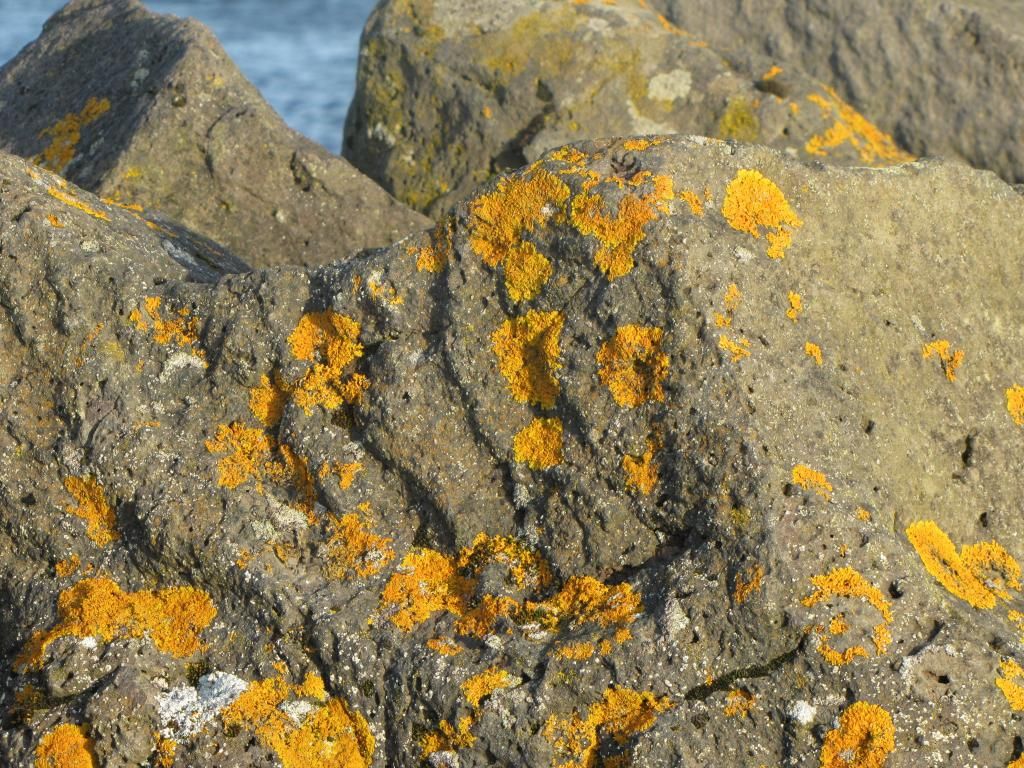
Icelandic lichen at Garðskagi
Iceland! Not an intensive birding trip, but a very special birthday vacation to a place where birds are a constant, and appreciated, presence. I was a little concerned that the timing (end of July/beginning of August) was a little late, as migration had already begun. But there were lots of breeding birds still on site who were, with the exception of some arctic terns, no longer so worried about humans observing them.
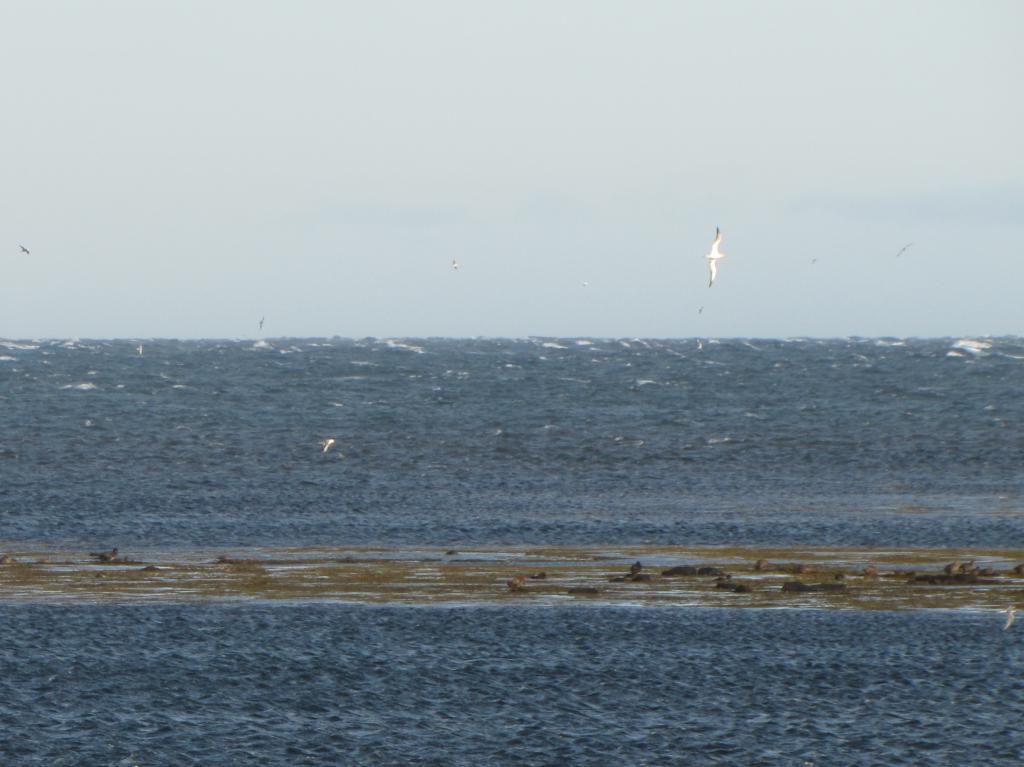
First Iceland bird: Northern Gannet
The international airport is in Keflavik, on the Reykjanes Peninsula, so it is convenient to explore the local surroundings immediately after landing, especially if your flight arrives at 6 in the morning. Note: it is both crucial to rent a car to explore Iceland and gut-wrenchingly expensive to do so. But you don't necessarily need a four-wheel drive unless you end on taking on the many, sometimes unexpectedly, unpaved roads with gusto. Our tiny Ford Fiesta, cautiously driven, worked out just fine.
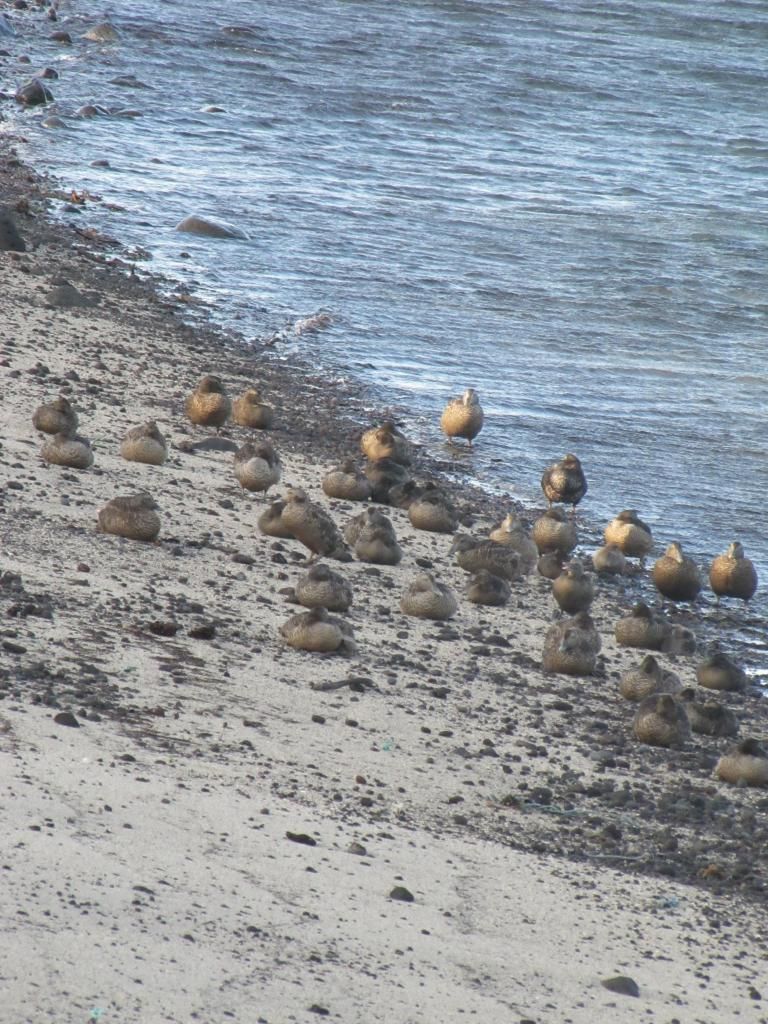
Common Eider on the beach 
We drove up to the lighthouse on the northwest tip of Reykjanes for our first stop. The wind was fierce but birdlife was abundant, both in the sea and on the shore.
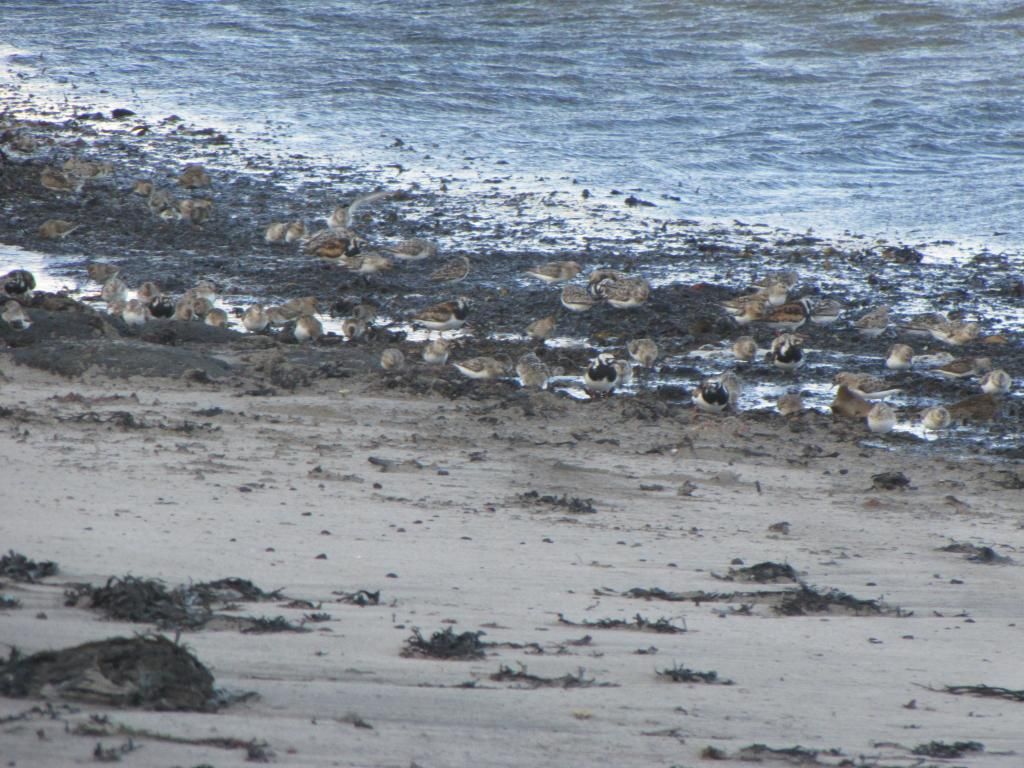
Shorebirds on the beach by Sanderði
We continued our exploration down the coast and quickly discovered that close encounters with birds were not only going to be possible on this trip but unavoidable.
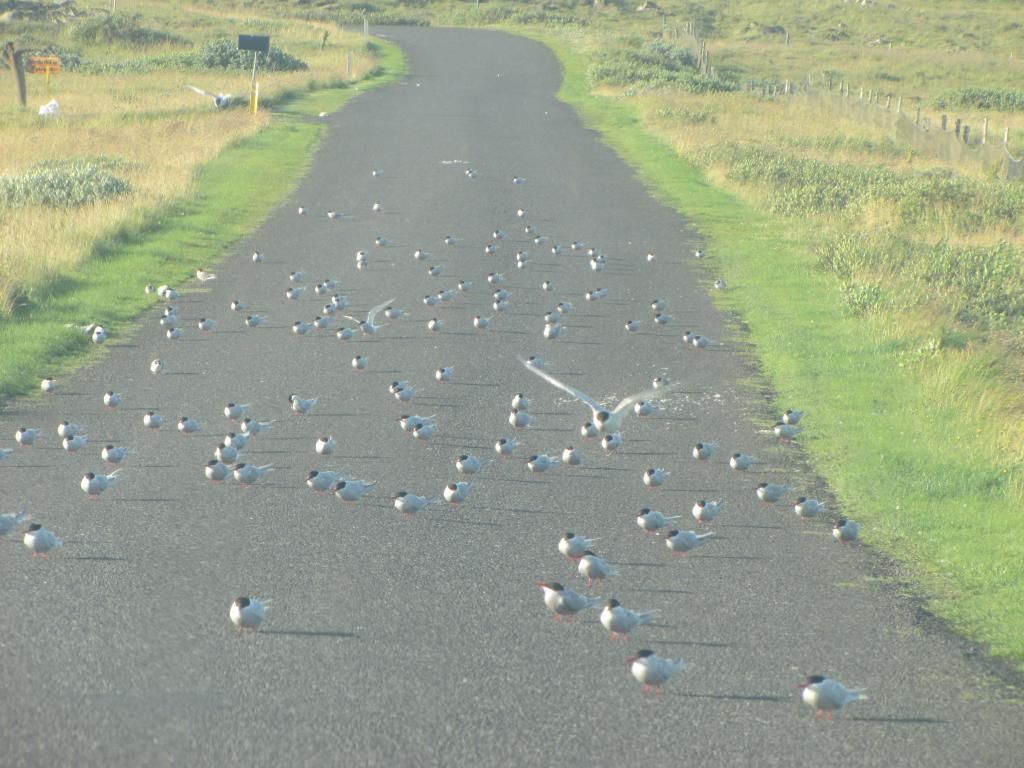
Arctic Terns on route 45
Even my non-birding wife (who I love for tolerating my many "distracted moments" this trip) was impressed by the numbers and boldness of the Arctic Terns colonizing the roads of Reykjanes.
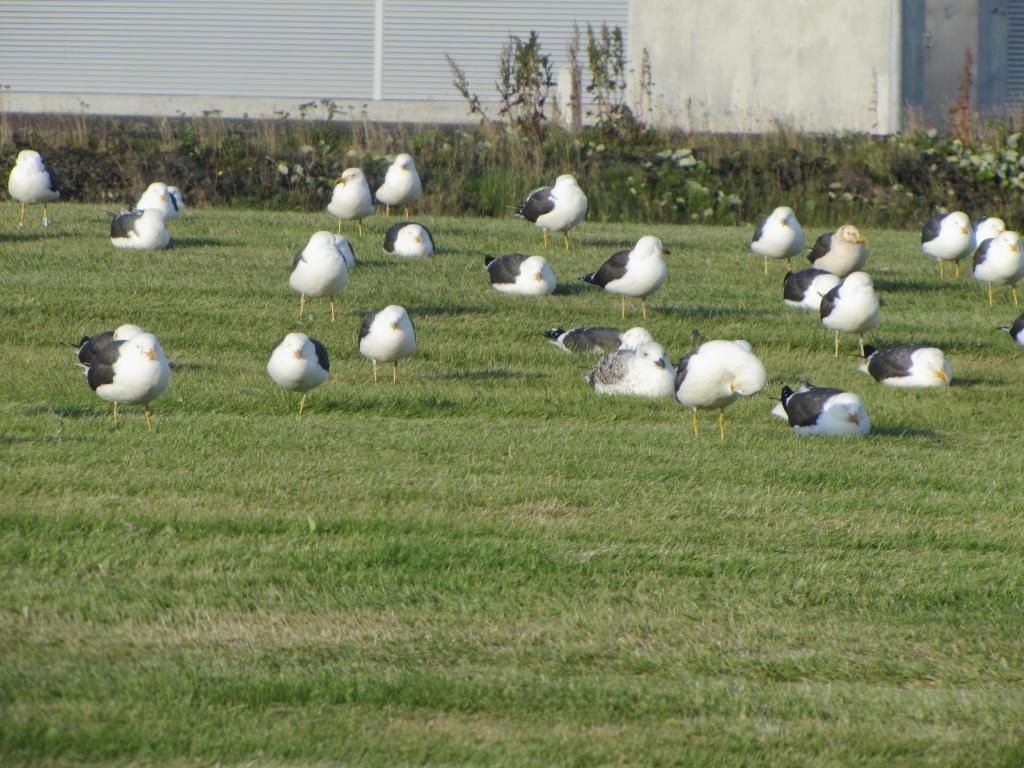
Lesser Black-Backed Gulls near the nature center at Sanderði
It is not the diversity of birdlife (except perhaps for ducks) on Iceland that is impressive but the sheer numbers, particularly at the end of the breeding period.
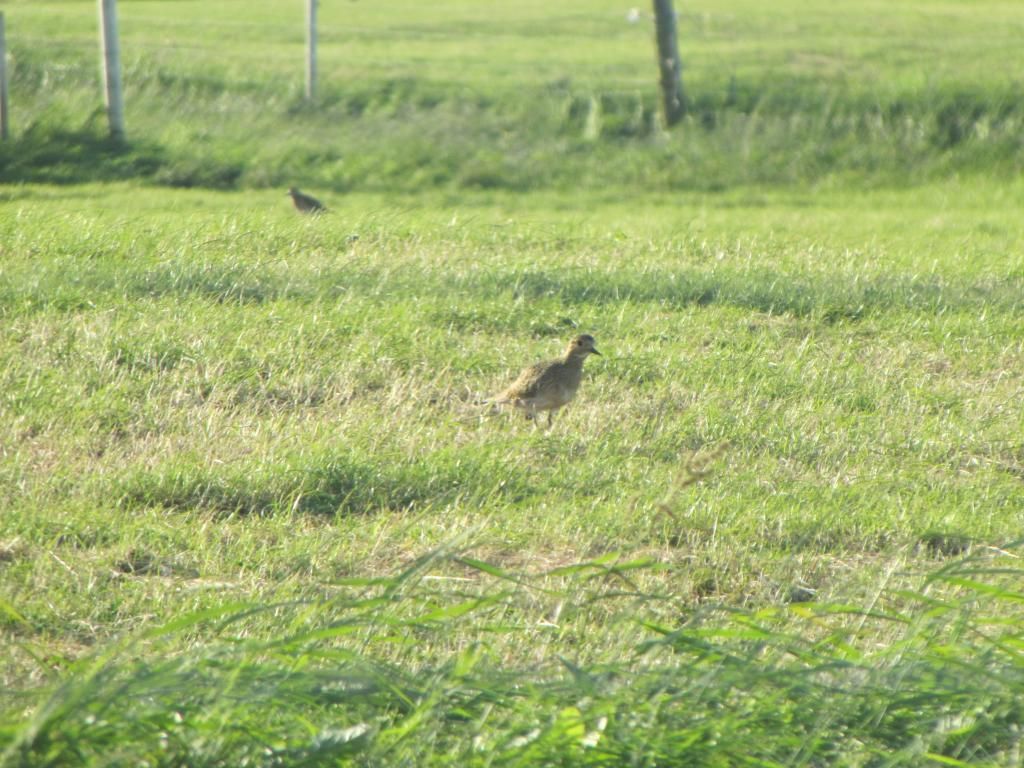
European Golden Plover
Iceland also provides ready access to a variety of European species. For me this meant an immediate "ticking" rush as we drove down the road.
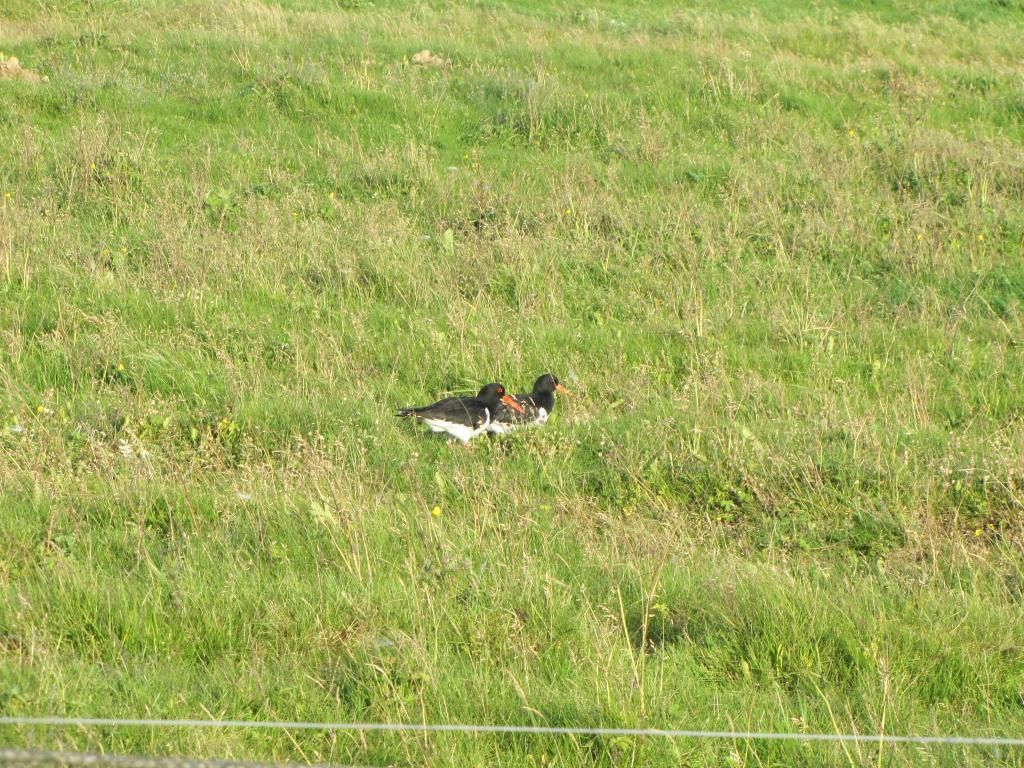
Eurasian Oystercatchers
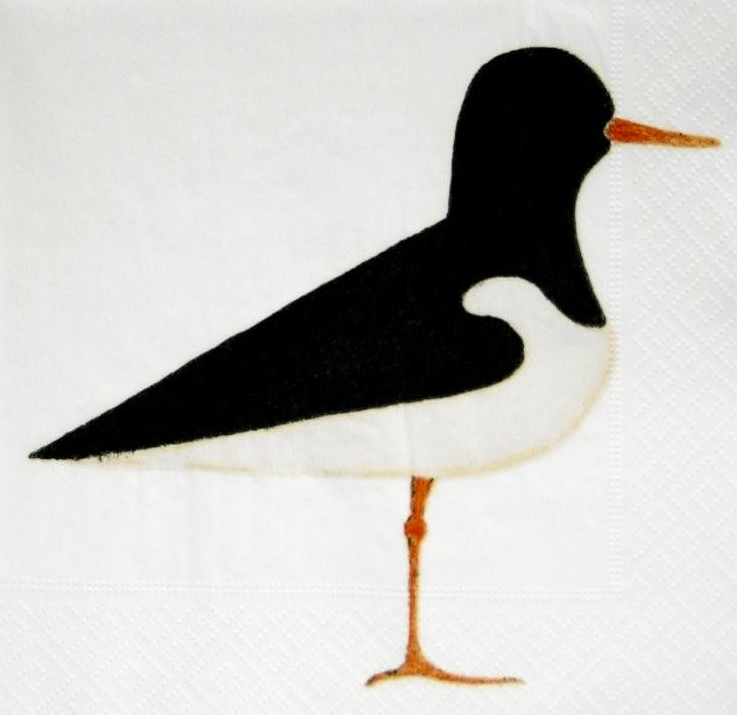
But encounters with golden plovers and oystercatchers are so common in Iceland they are institutionalized as tourism imagery.
Pack of Tjaldur-emblazoned napkins bought at Reykjavik gift shop
On Reykjanes, the real joy is to be had at bird cliffs.
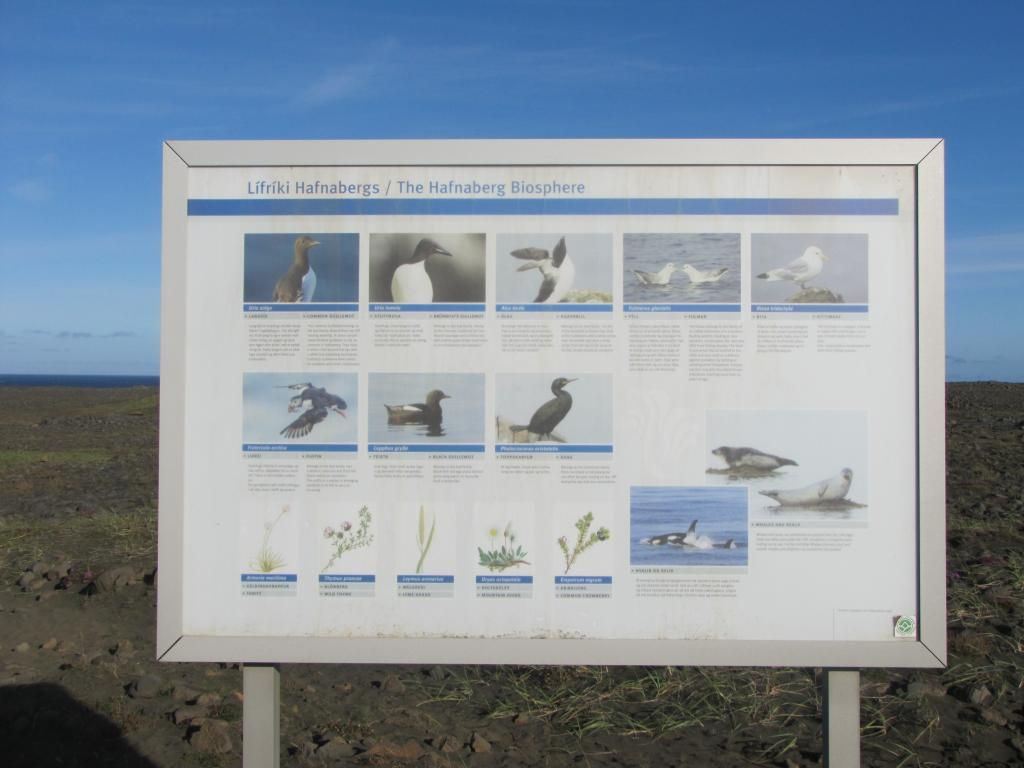
Sign at Hafnaberg
The best set of bird cliffs from a diversity point of view is at Hafnaberg, about midway down the coast. But because of our sleep deprivation, the high winds, and the fact that we had tickets to the Blue Lagoon, we decided to forgo the 90 minute walk there and back. Instead we drove down to a far more accessible bird cliff in the far southwest.
Cliff near Reykjanes Lighthouse 
We walked up the cliff, amazed.
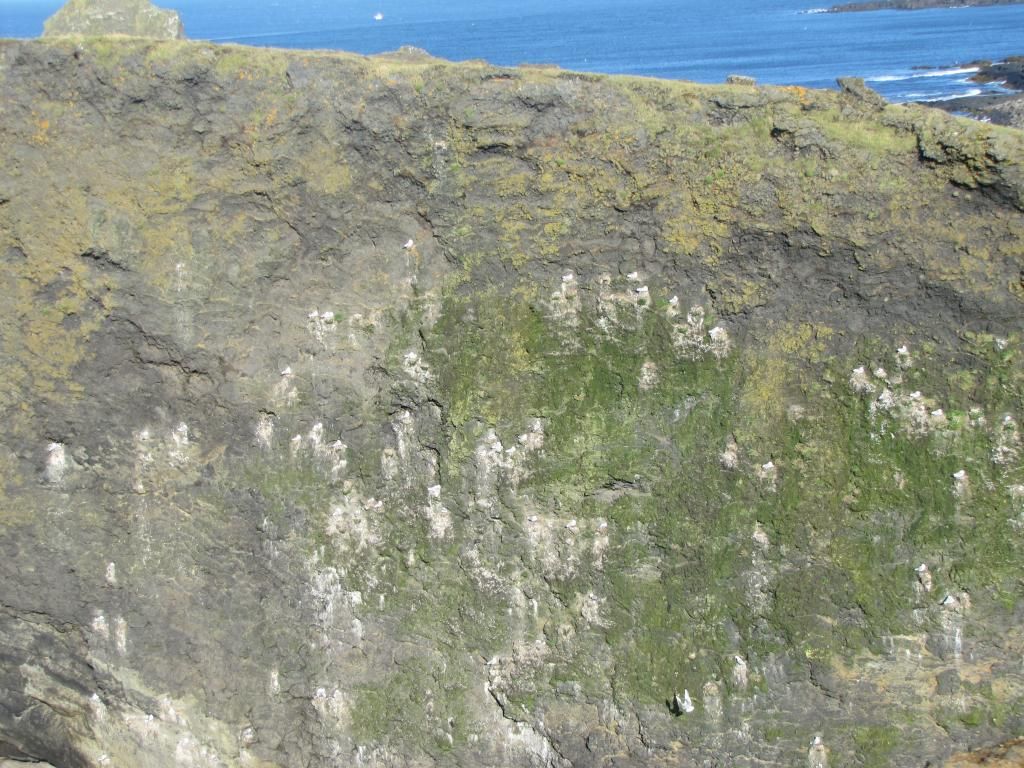
Cliff-top view of nesting birds
Dozens of nesting kittiwakes still remained at the end of breeding season.
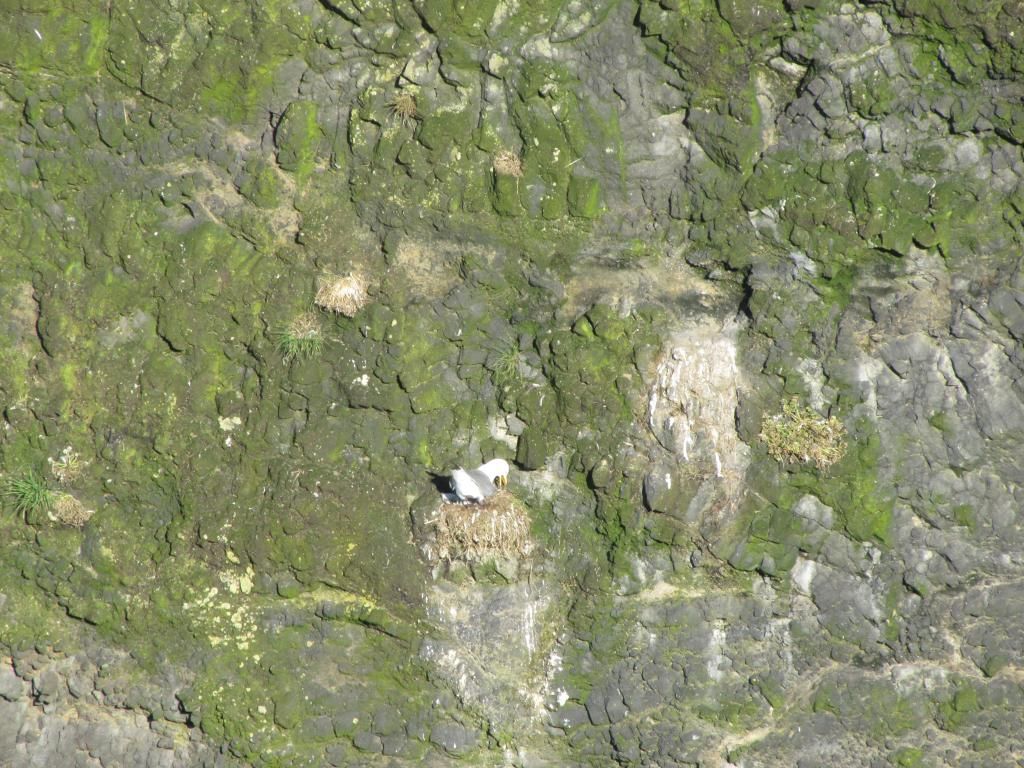
Black-legged Kittiwake on nest
On the other side (unpictured), a gigantic, noisy, tern colony.
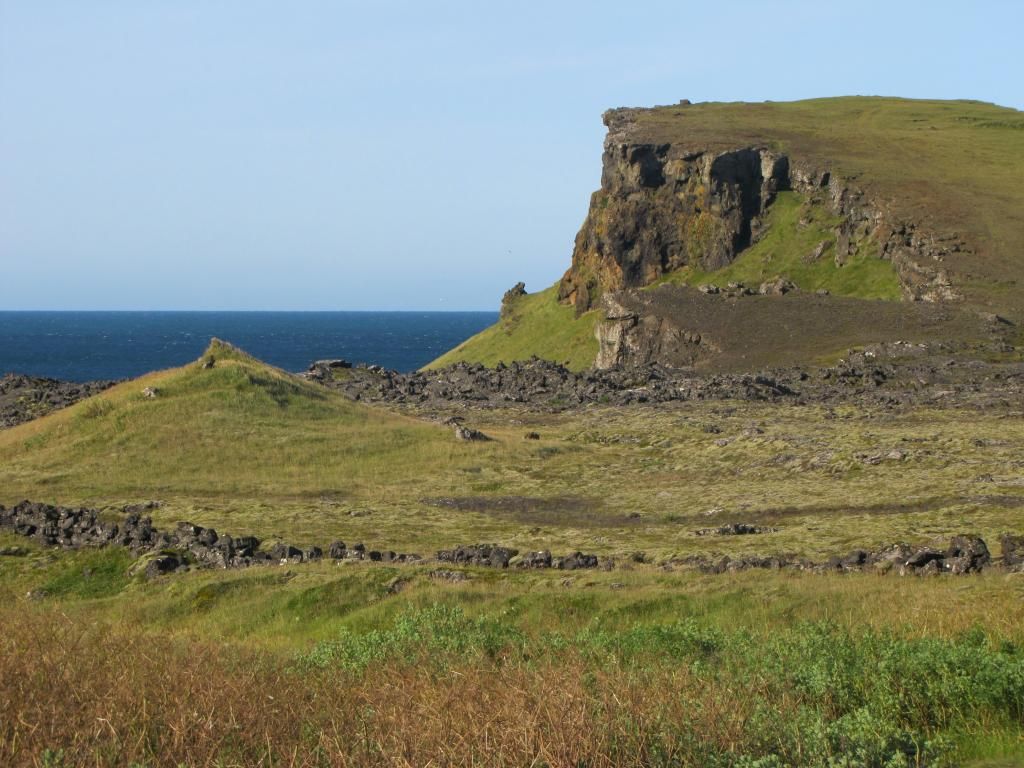
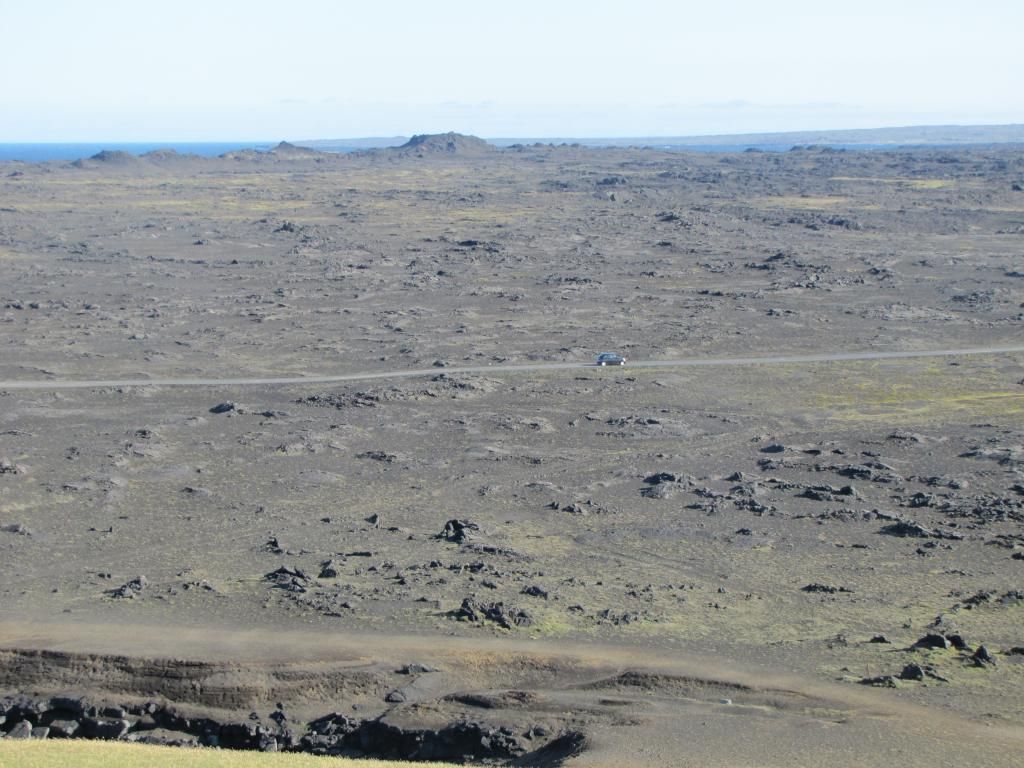
Cliff-top view of Reykjanes lavascape
And then it was time to move on. Next stop: Reykjavik (via the Blue Lagoon, of course).
Wednesday, July 23, 2014

Bluebirds! Season 4. Episode 12. Season Finale!

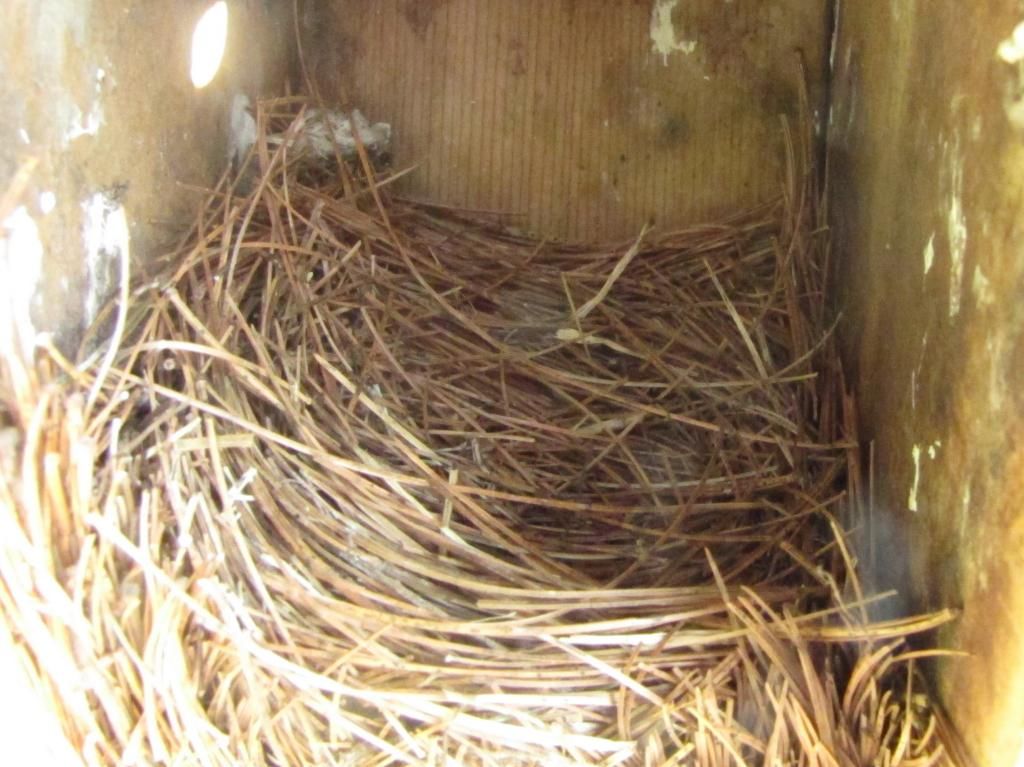
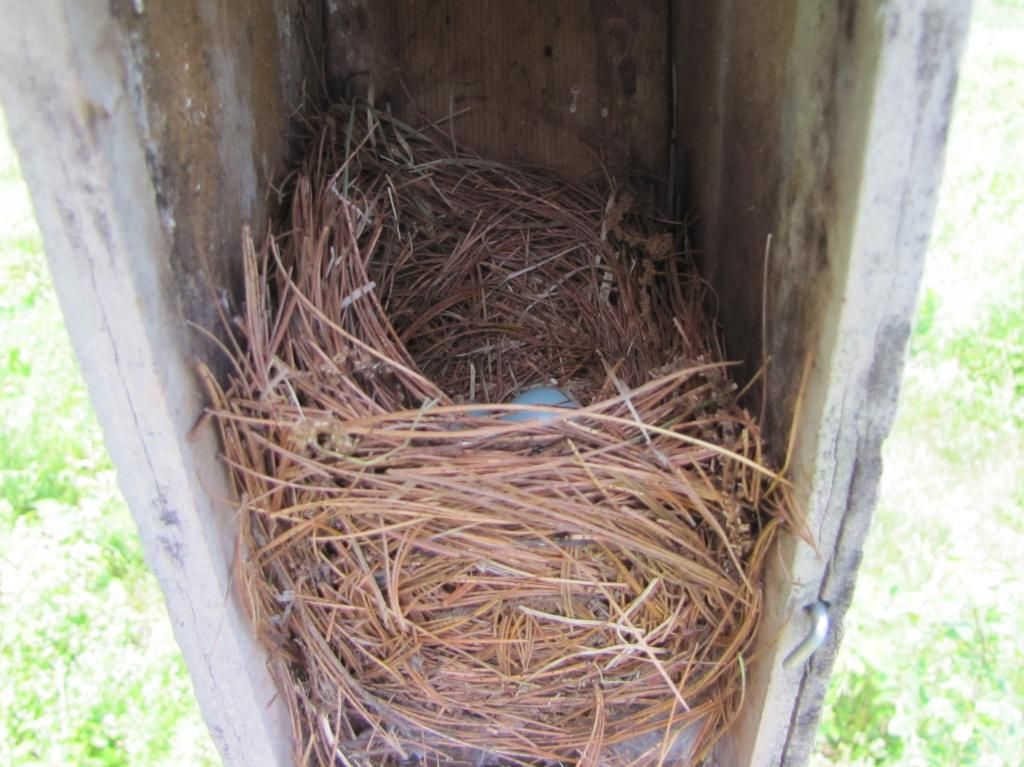
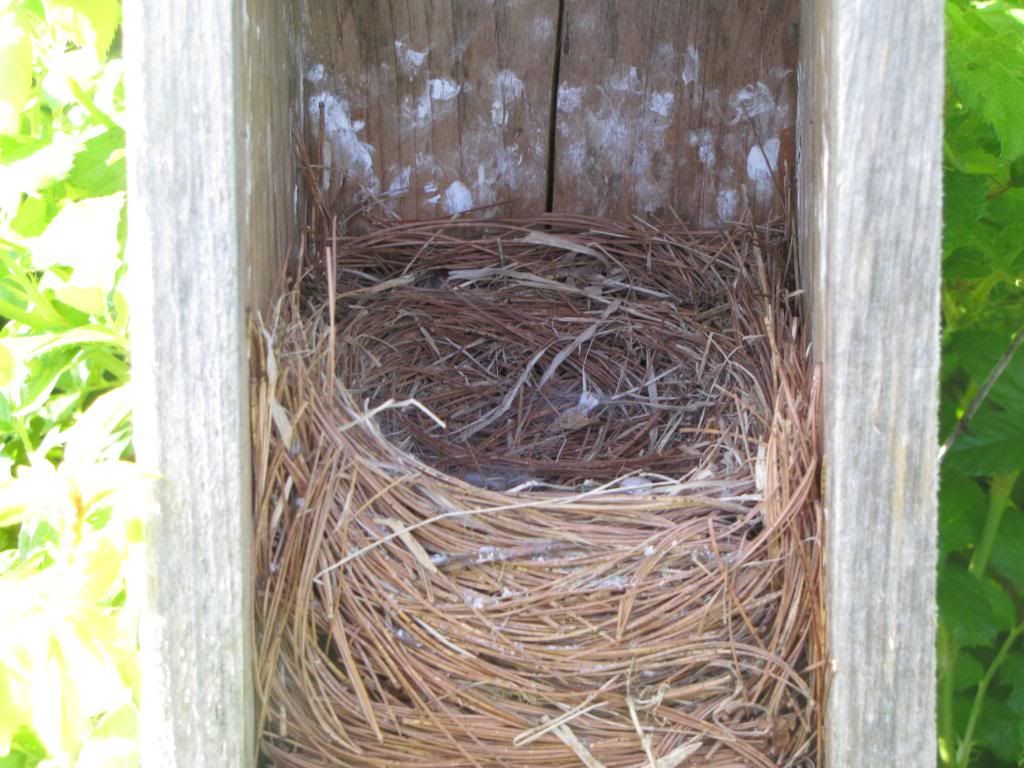
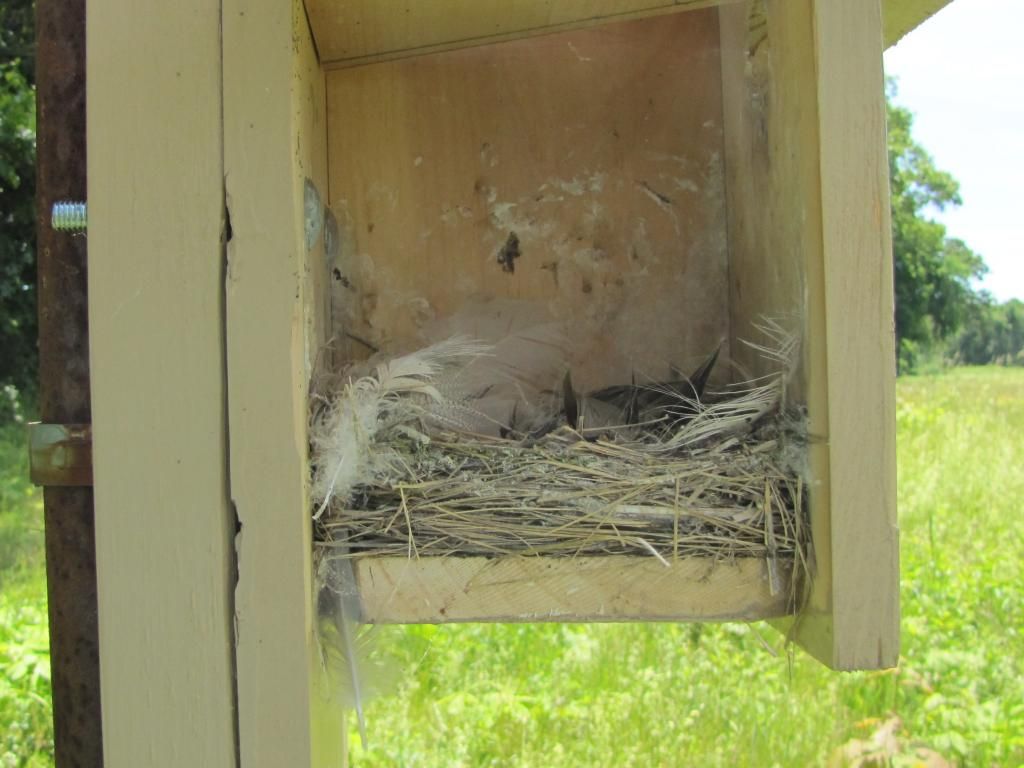
Empty bluebird nest
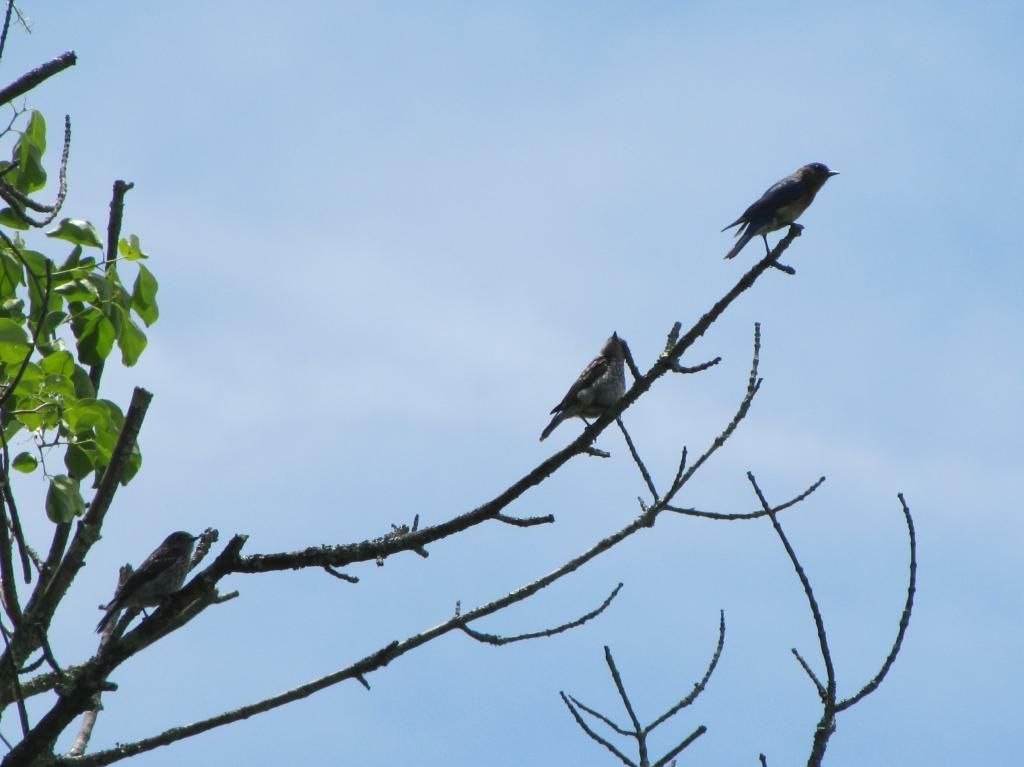
Well, that's that. The two remaining Eastern Bluebird nests at Charles River Peninsula are now empty. Looks like fledging happened. Though one never knows for sure. This nest is mighty clean. I would have expected a little more mess (though perhaps my expectations are thrown off by the magnificent poopy messes left by tree swallows).
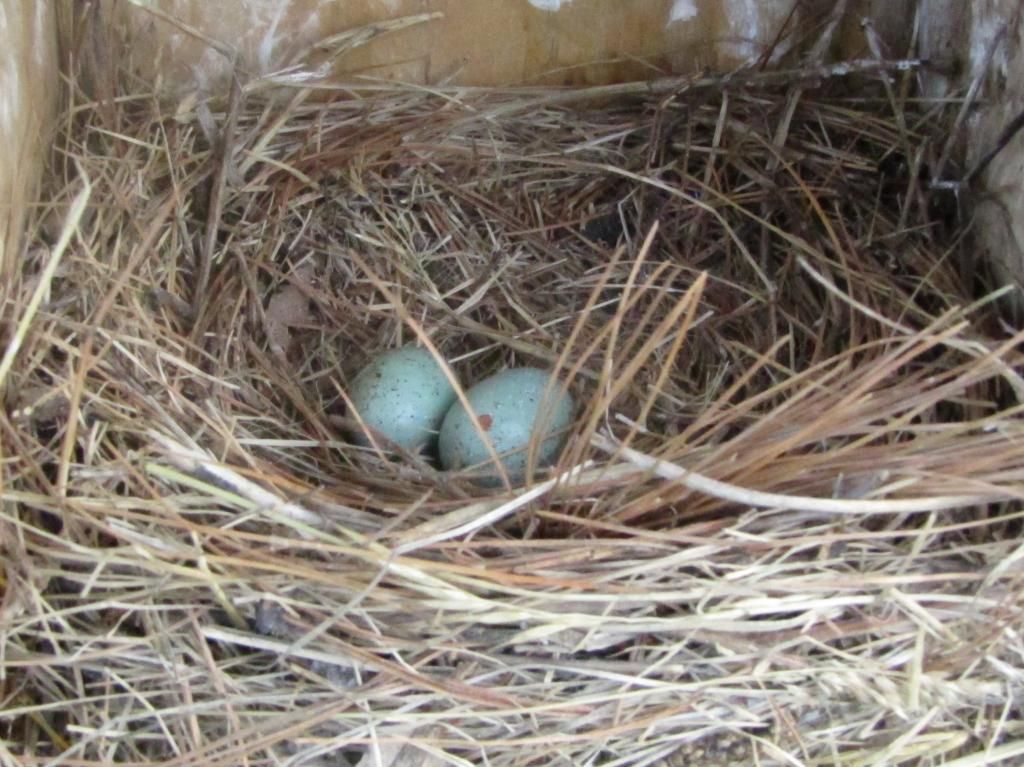
Unhatched eggs
And adding a note of melancholy to this whole business, the other empty nest isn't completely empty. Two eggs left behind, unhatched....

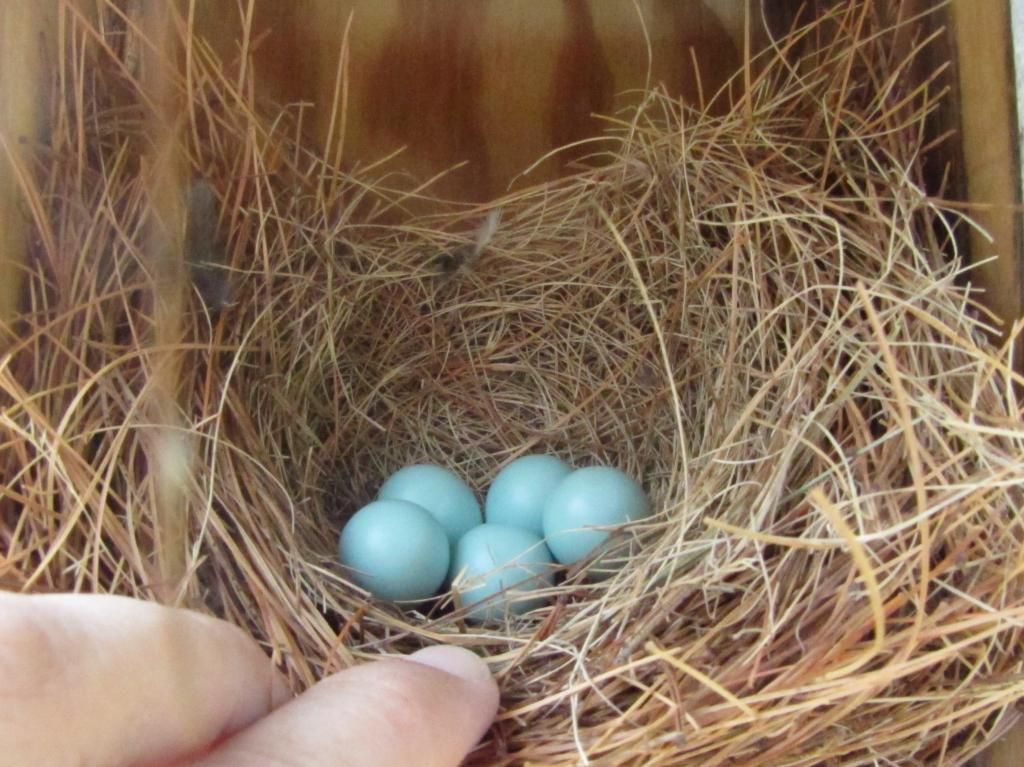
But wait! What of the Ridge Hill spin-off project?  The two tree swallow nests have fledged. But what's this in box 2, the box originally chosen by bluebirds, who were then driven off by house sparrows?
Eastern Bluebird eggs
It would appear we aren't done yet.

Tuesday, July 8, 2014

Mount Greylock

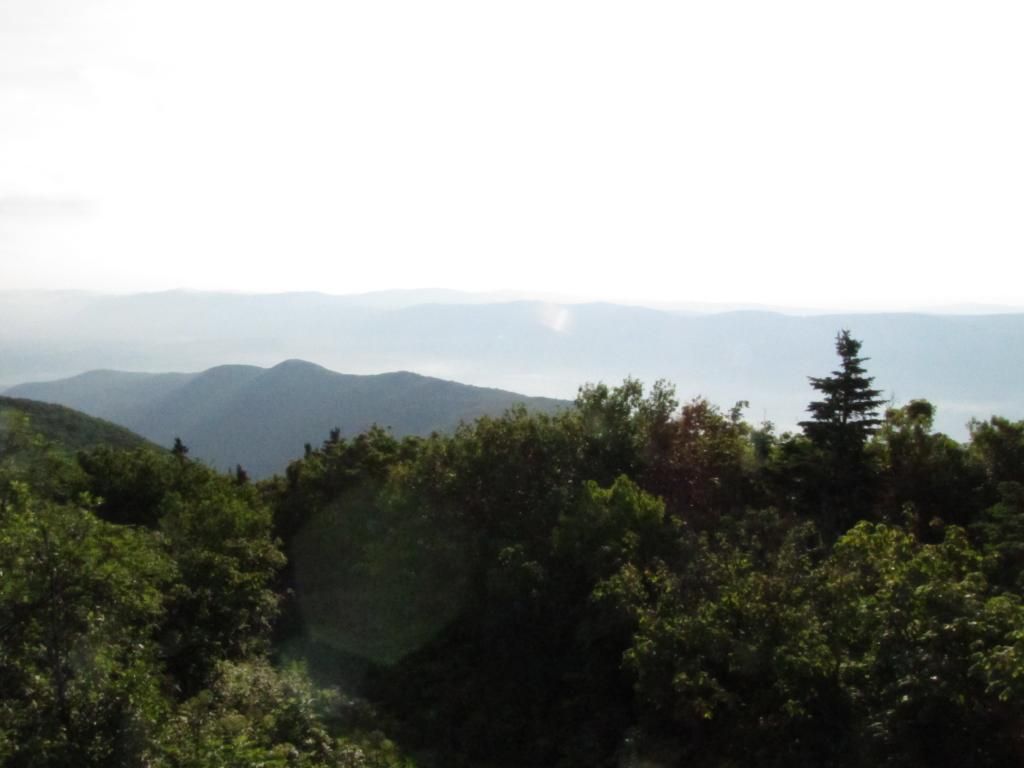
View from Summit of Mt. Greylock
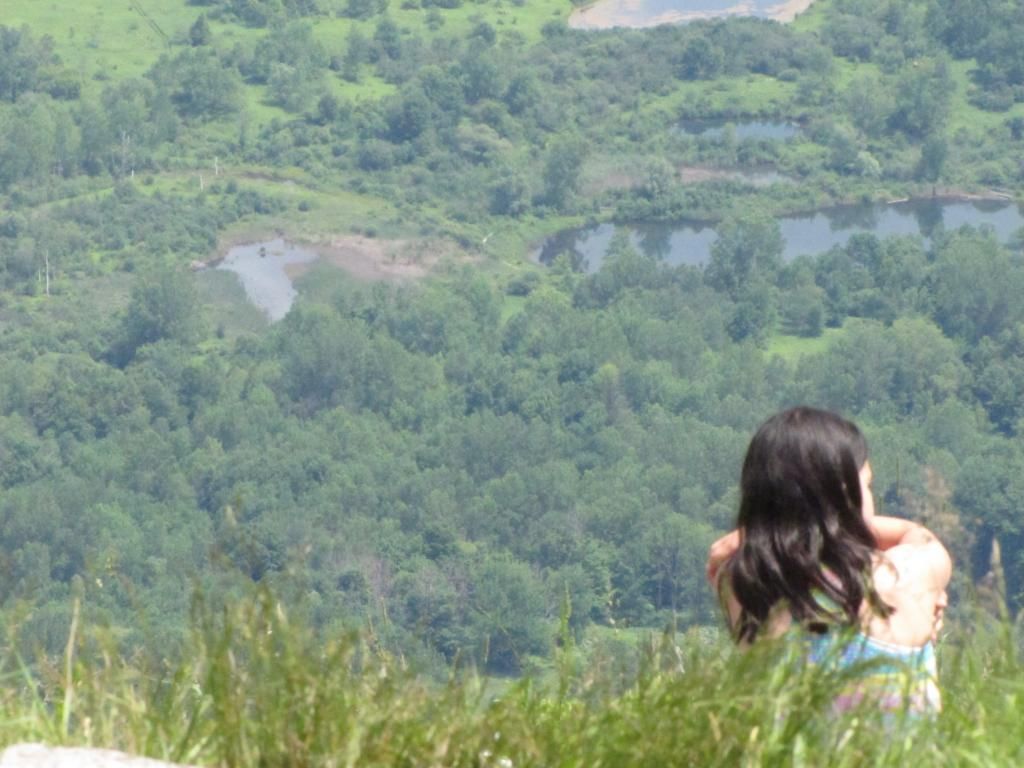
In the Berkshires for the weekend, I had a taste for early morning birding on Mt. Greylock. I convinced Lily it was worth getting up at 5 a.m. to get there at sunrise.
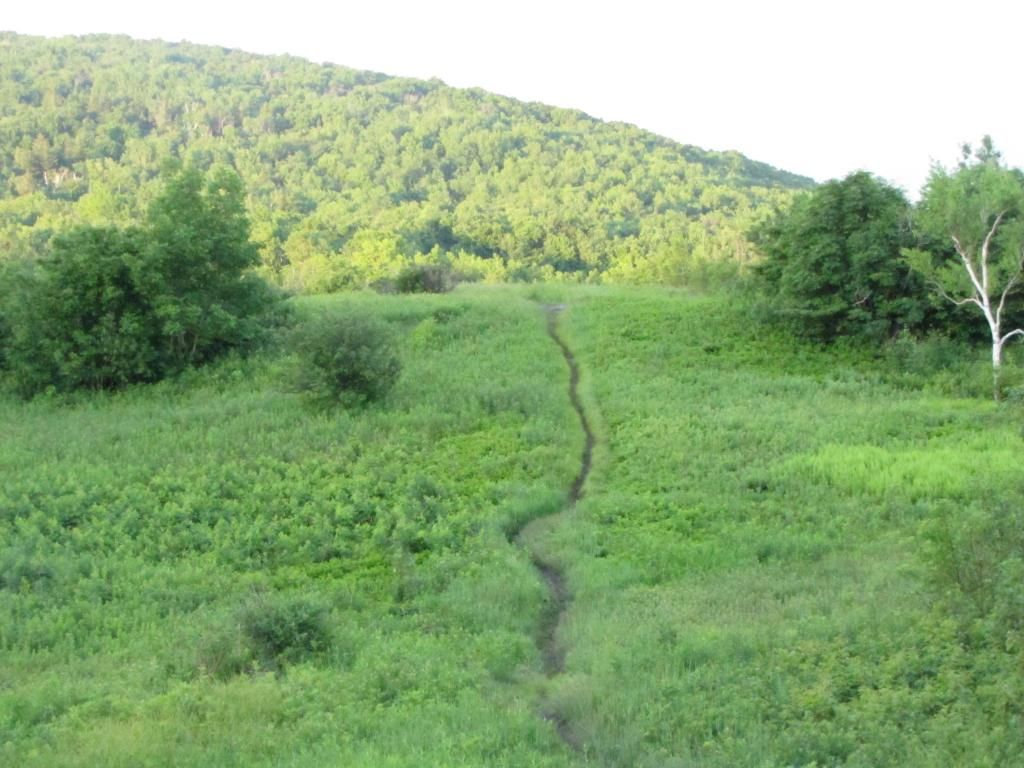
Jones' Nose Trail
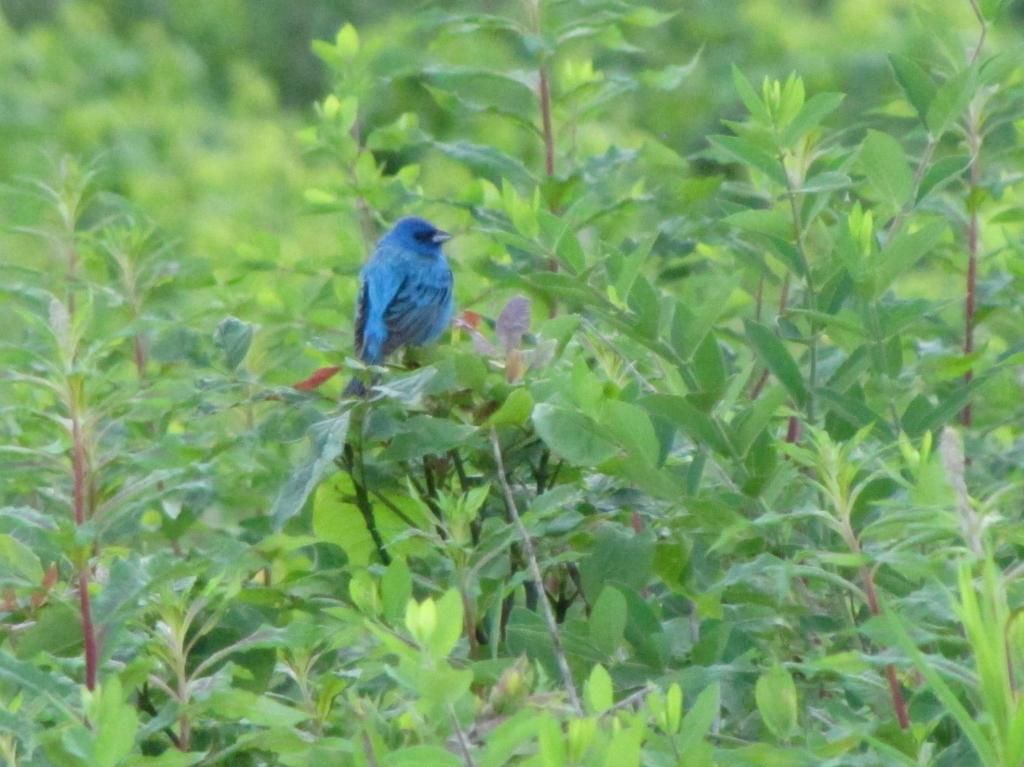
I'm not going to say I won her over to the joys of mid-summer sunrise birding, but she warmed up when she saw her first close-up Indigo Bunting.
Indigo Bunting,  Jones' Nose
They were singing, everywhere, loudly.
View from Mt. Greylock summit
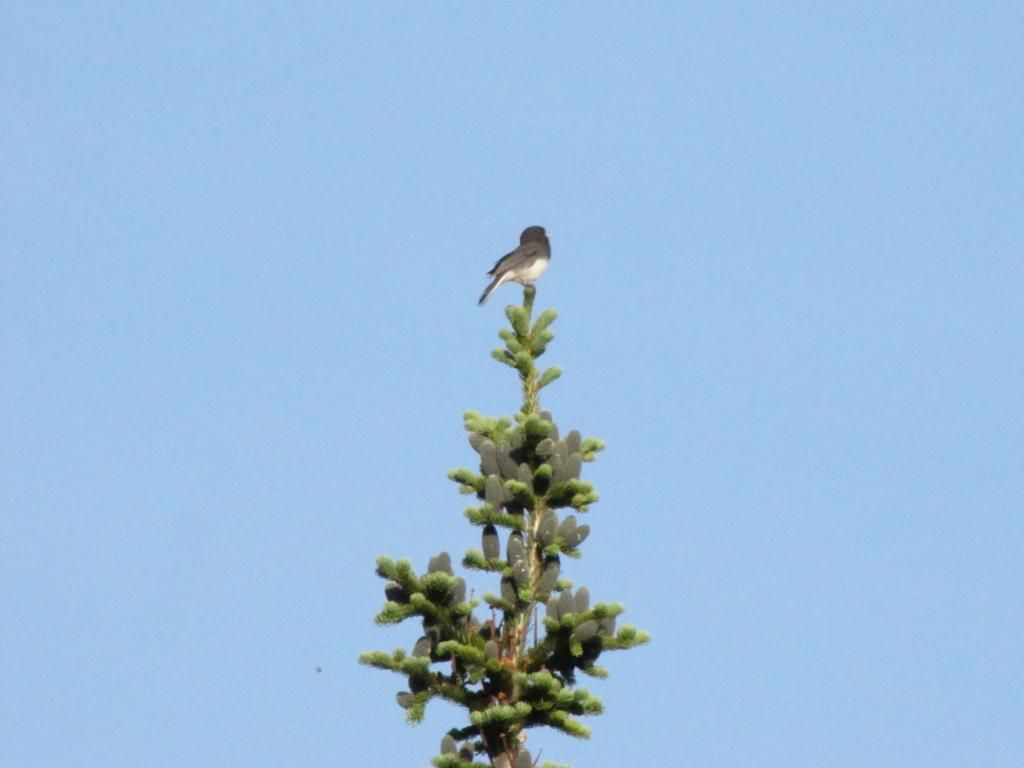
Then it was off to the summit to see if we could find rare Massachusetts breeders. We were not disappointed. Blackpolls and Yellow-rumps, visible and singing. And juncos, so odd to see in the summer.
Dark-eyed Junco, Mt. Greylock
The highlight of the day: we were tracking down a Blackpoll Warbler when suddenly out popped what I thought was a Cape May Warbler, a longtime nemesis bird of mine. I caught a glimpse of cheek and pin-striped yellow breast before it zipped away but I was afraid to call it, being color-blind and all. "Was its cheek red?" I asked Lily. "Yes, it was red," she confirmed. We celebrated all the way down the mountain. Lily was happy she'd come, and I was too. For many reasons.

Monday, June 30, 2014

Moose Hill Farm

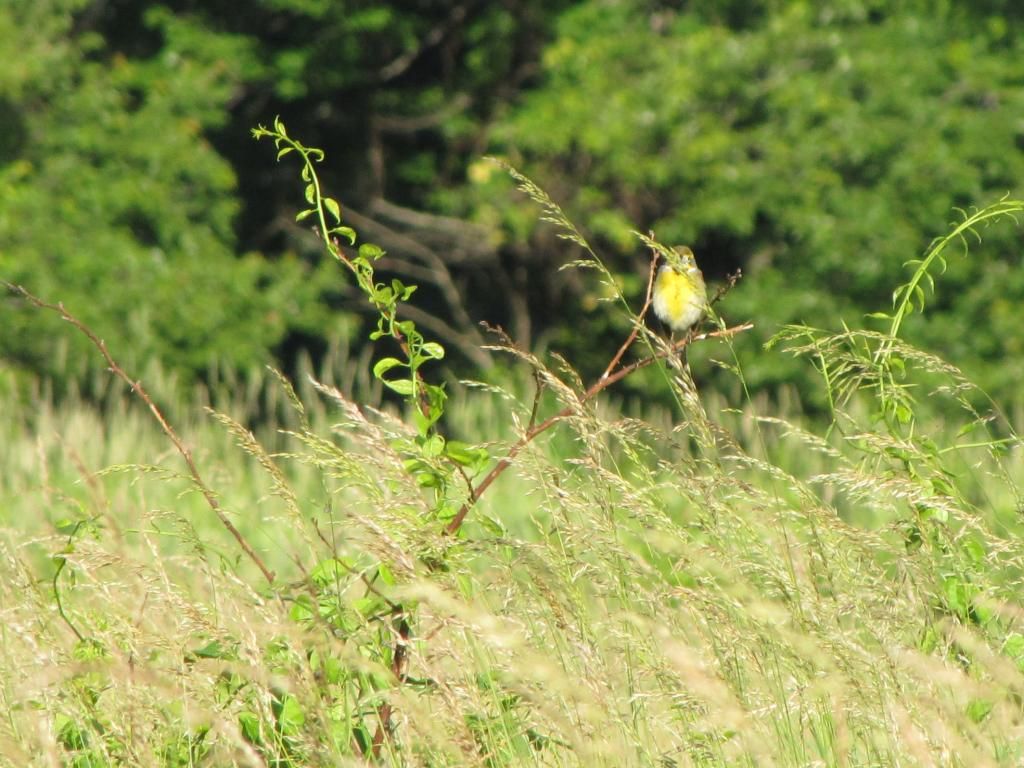
Dickcissel (behind the grass)
Like half the birders in Massachusetts, it seems, I made the trip to Moose Hill Farm to enable a check to go into a box on a list in a book. What a pretty little cooperative bird. It was there at 6:30 a.m., immediately identifiable by sight and sound, posed for a few moments, and then flew off across the field. And then I was free to experience the other joys of Moose Hill, which are considerable. Near the dickcissel stake-out spot, for example, there was an eye-level oriole nest complete with loudly vocalizing nestlings.
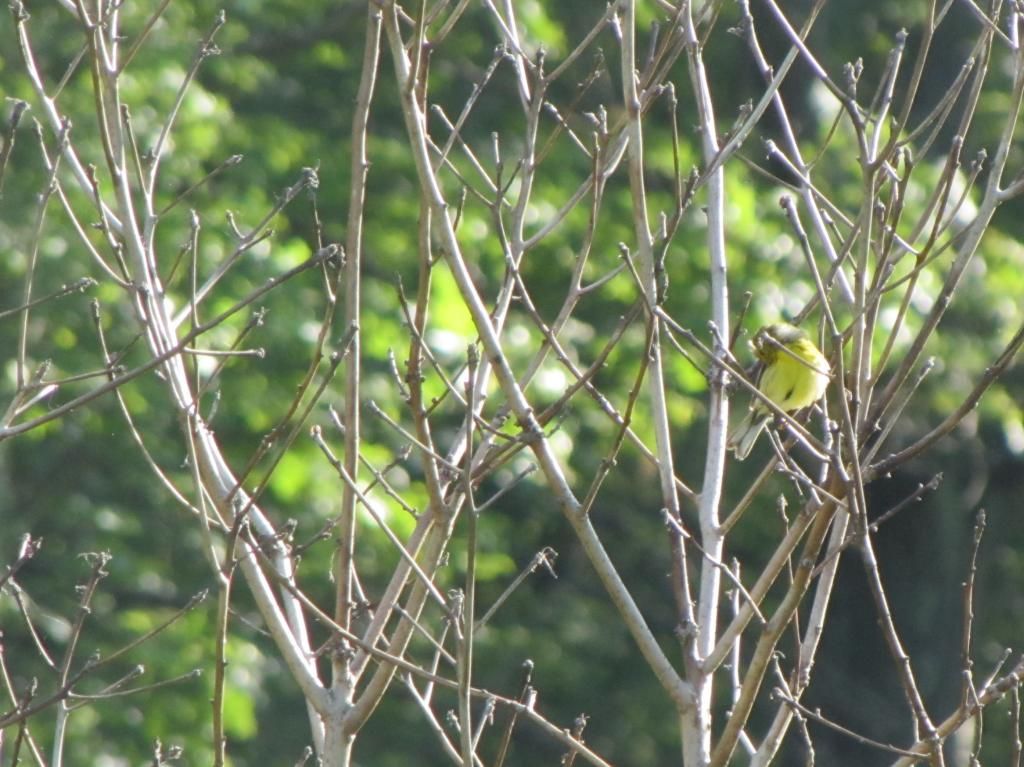
Prairie Warbler (preening)
But it is the easement running through the Moose Hill Farm property that was the real revelation for me. Shrub-land of the sort that means eastern towhees, field sparrows, prairie warblers, and indigo buntings. And the reasonable imagination of golden-winged warblers (for me, on that day, just blue-winged). I was able to capture some of the magic in the video below. Listen to the field sparrow's loudly ringing song with a descending pattern perfectly complementing the prairie warbler's ascending chorus.

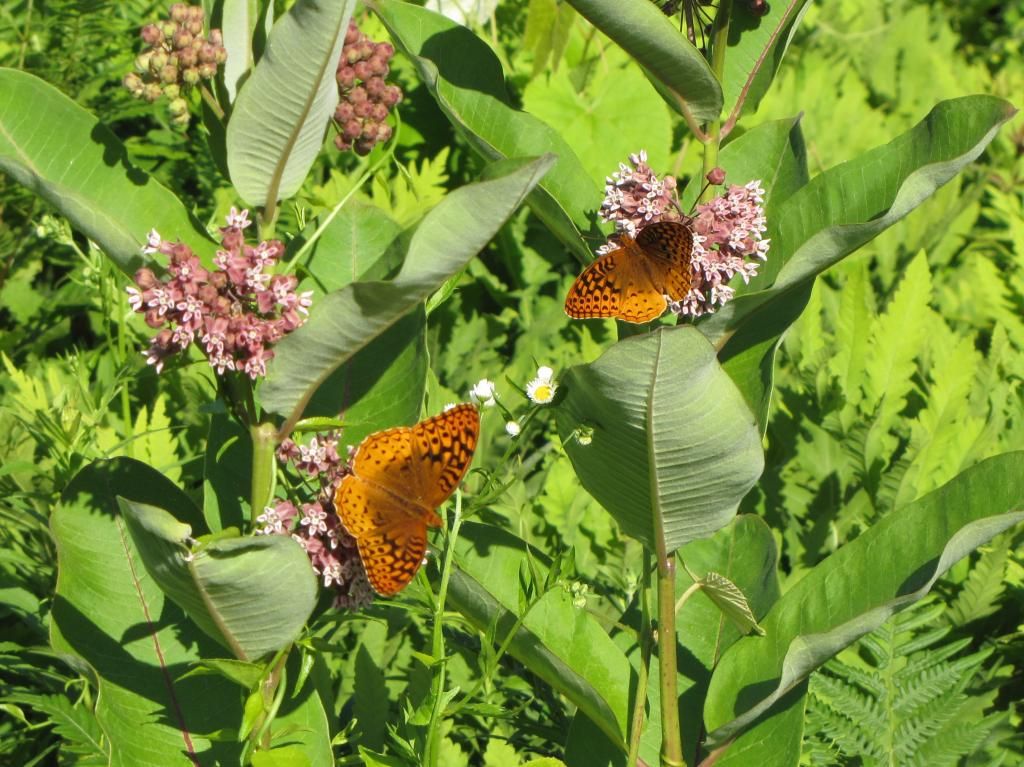
It is also a fine place to explore other dimensions of life. Especially wildflowers and butterflies.
Great Spangled Frittilary on milkweed blossoms
The friendliness of Moose Hill Farm to wildlife can be summarized by the following image:

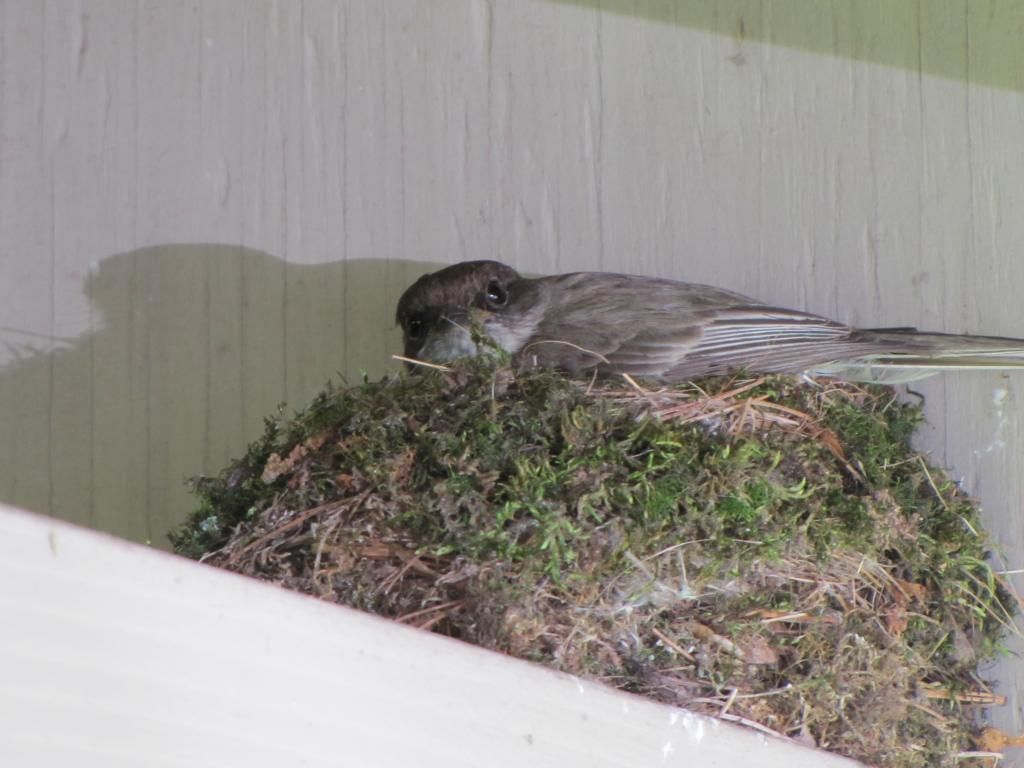
Eastern Phoebe under the eaves of the Moose Hill Farm kiosk
This phoebe, on nest (and not moving off nest), making good use of the parking lot kiosk. 

Bluebirds! Season 4. Episode 11. Almost done.

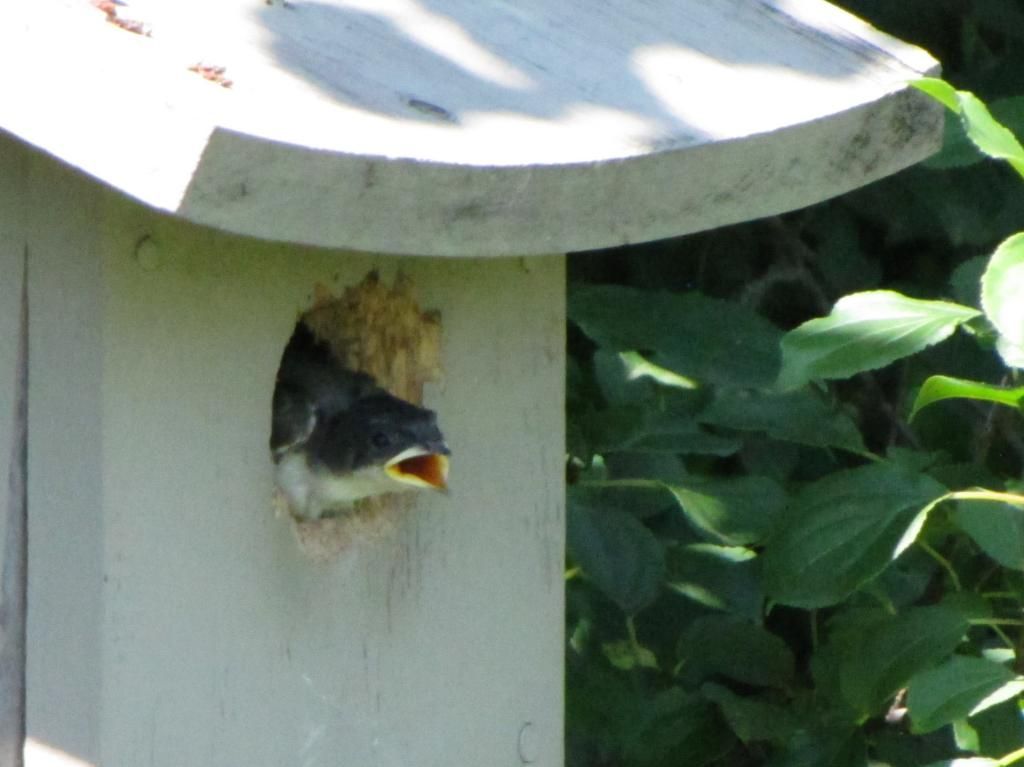
Tree Swallow fledgling
Only four out of seventeen boxes at Charles River Peninsula are still active. Two bluebird nests (one with eggs, the other with chicks) and two tree swallow nests (both ready to go). I spent an afternoon last week cleaning out the finished boxes. Will go back and clean out the rest when the bluebirds have left.
Tree Swallow fledgling
I will miss the parental dive-bombing when these guys finally fledge. Perhaps the red-winged blackbirds can take up the slack. 

Monday, June 16, 2014

Bluebirds Season 4. Episode 10. Endings and New Beginnings.

Next year's Father's Day card
Four of the tree swallow nests have already fledged. I expect most of the others will fledge during the coming week. Thus ends the intensive nesting season at Charles River Peninsula. With an eventual quadrupling of the number of swallows floating over the property.
New Eastern Bluebird nest (5 eggs, 1 visible here)
But bluebirds brood twice around here so nesting itself will stretch into late July, even August. There are two new nests already. The box 4 nesters are back in the same location, with one egg so far. The box 13 nesters have moved on to a new (IMO horrible) location in the confines of the great leaning box 11. Even the tree swallows rejected that one. But it is too late. There are already 5 eggs.
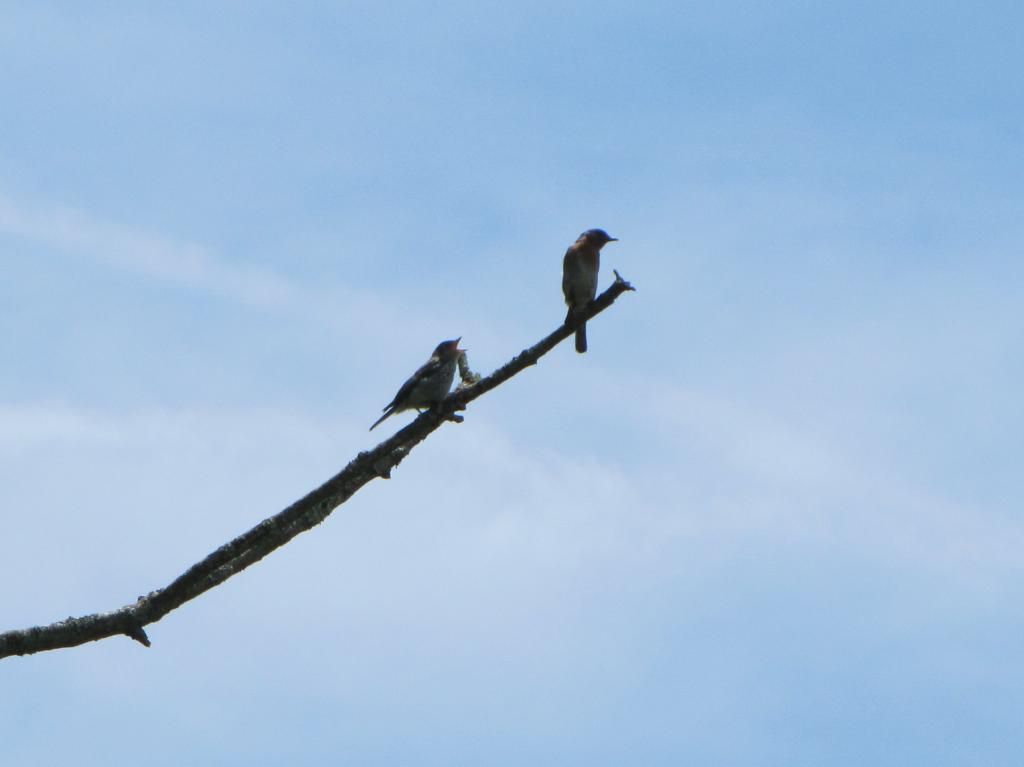
Two bluebird fledglings and their dad
Meanwhile, the bluebird dads are busy keeping the young ones safe and happy. A week after leaving the nest, all four box 4 fledglings are still alive (two seen above).
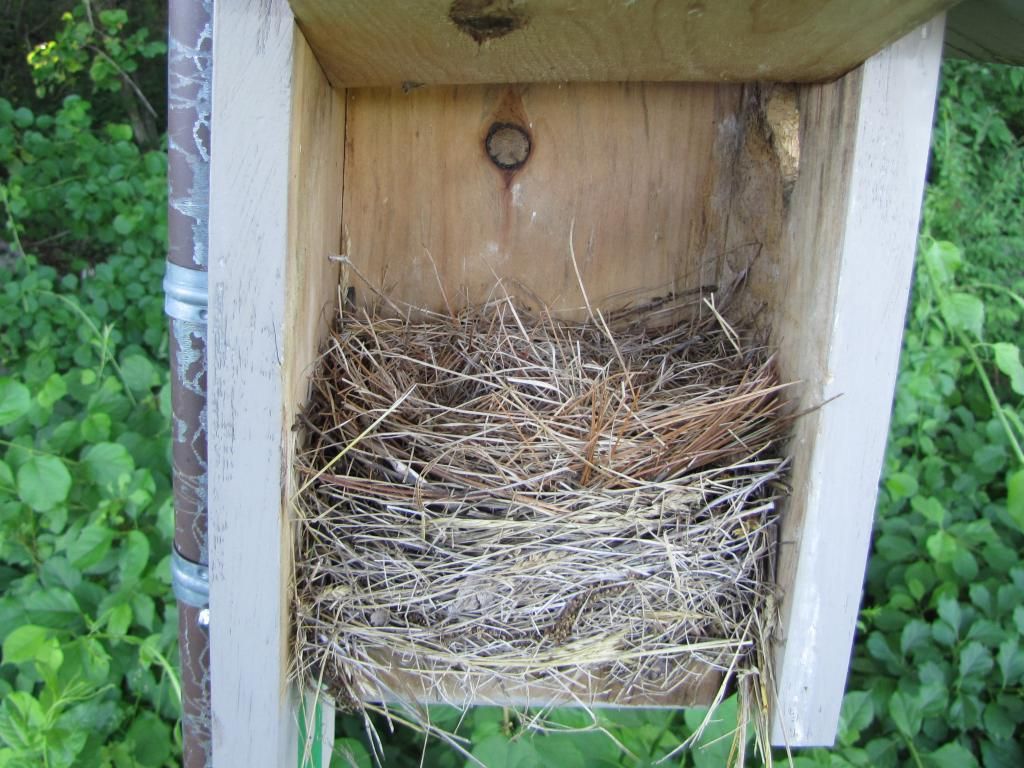
As for Ridge Hill: 2 tree swallow nests with eggs. I seem to have dissuaded the house sparrows from nesting on the property.

Sunday, June 1, 2014

Bluebirds! Season 4. Episode 9. Empty Nest(s).

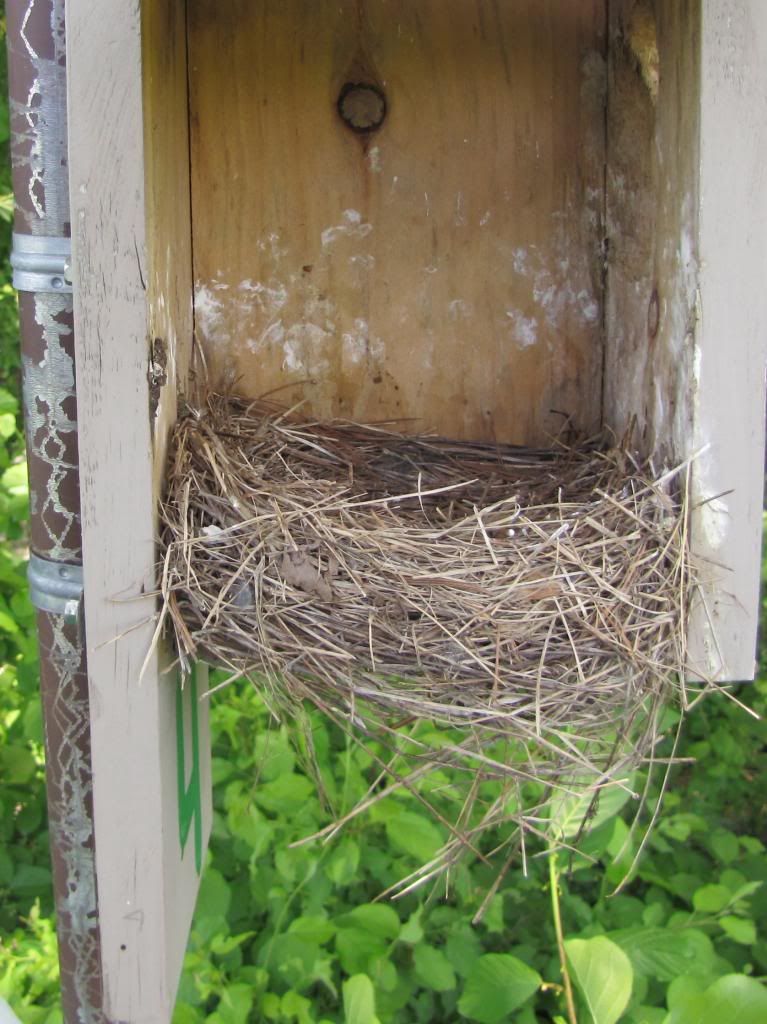
Empty Eastern Bluebird nest
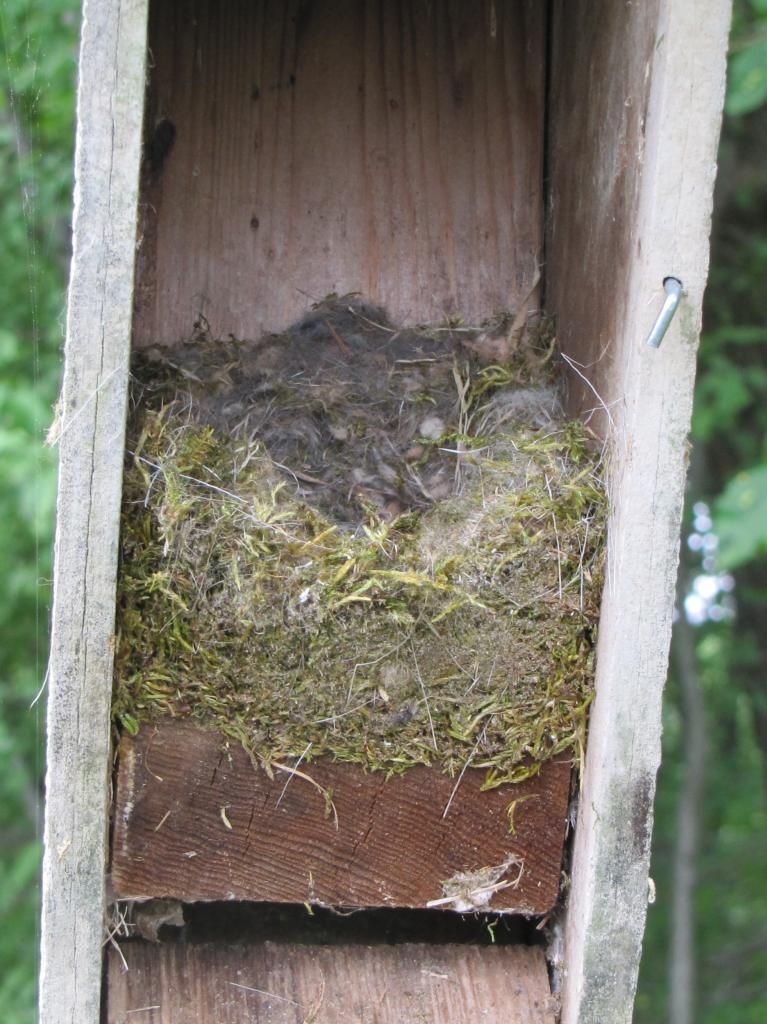
Empty Black-capped Chickadee nest

Empty Tree Swallow nest

Empty (but new!) Eastern Bluebird nest